
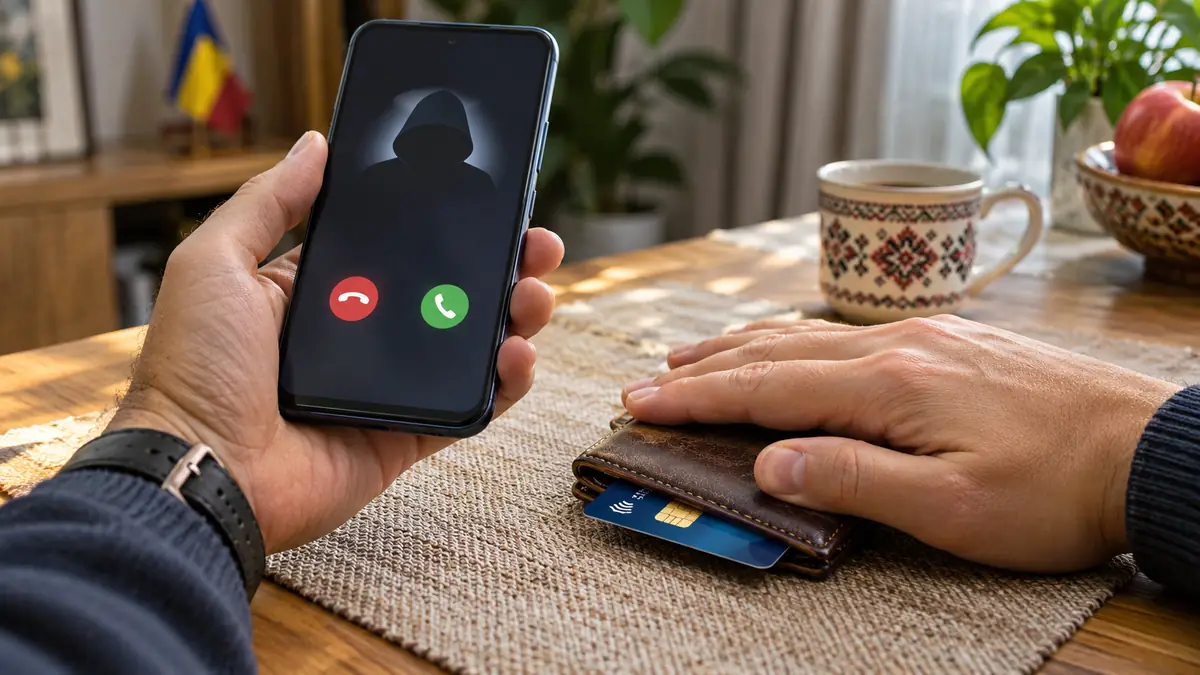
The ING SAFE Talks event on 14 July 2026 presented DNSC data on digital fraud. In the first half of the year, 42% of reported incidents were phone scams known as vishing. PhishingPhishingImpersonating a bank, lender or another institution to steal data, money or account access. The message may include a link to a site designed to look official.Full explanation → accounted for 14%, and scams by text, known as smishingSmishingA scam by text. The sender may impersonate a bank, lender or parcel company and demand an urgent payment or confirmation of details.Full explanation →, accounted for 13%. The Romanian Police and Institutul Român pentru Îmbătrânire Activă also attended the event.
The 42% figure is the share of incidents reported to the specified institution. It tells us about those reports, rather than measuring how many calls in Romania are fraudulent or all activity on the network.
If a caller claims to represent your bank and pressures you to transfer funds, end the call. Contact the bank through a number in its official app or documents. Keep authorisation codes and credentials private when someone calls you. If you suspect an unauthorised transaction, report it quickly and secure access to the account.
Glossary terms in this story
Source: ING Bank România / DNSC — ING SAFE Talks. Publication or event date: 2026-07-14.
There are no written reviews yet. Be the first to share your experience.